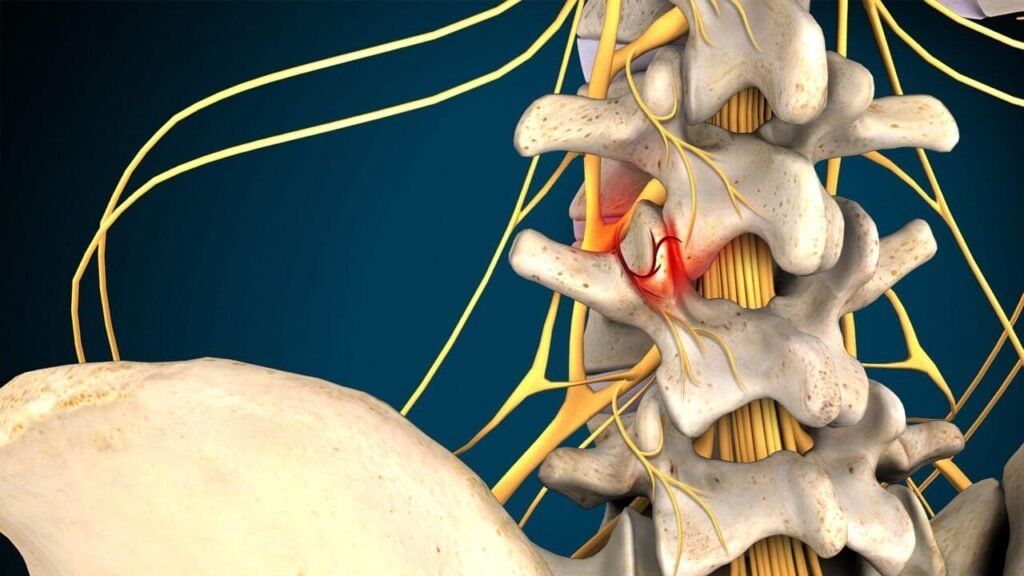
Disc herniation and nerve root compression dominate the conversation about back pain – and for good reason, since they are among the most common structural causes of serious spinal symptoms. But there is another set of spinal structures that produces a significant proportion of chronic back and neck pain: the facet joints.
Facet joint syndrome – also called zygapophysial joint syndrome – is estimated to account for a substantial portion of chronic low back pain cases, and an even higher proportion of chronic neck pain. Despite this prevalence, it receives far less attention in patient education and mainstream back pain discussion than disc conditions. For anyone whose back or neck pain has resisted standard treatment approaches, facet joint involvement deserves consideration.
What Are Facet Joints and What Do They Do?
The facet joints are paired synovial joints located at the posterior aspect of each vertebral segment. Each vertebra connects to the one above and below it through a pair of facet joints at the back of the spine, in addition to the intervertebral disc at the front.
Like the joints in the knee or hip, facet joints are lined with hyaline cartilage and enclosed in a synovial capsule that produces lubricating fluid. They guide and limit spinal movement, resisting the rotational and shear forces that would otherwise place excessive stress on the disc.
Under conditions of repetitive loading, excessive compression (particularly with spinal extension and rotation), or progressive disc height loss that increases the compressive load the facet joints must bear, these joints develop the same arthritic changes that affect other joints in the body: cartilage thinning, subchondral bone changes, osteophyte formation, and synovial inflammation.
Symptoms That Suggest Facet Joint Involvement
Facet joint pain has characteristics that can help differentiate it from disc-related pain, though the two often coexist:
- Pain that is typically worse with spinal extension (backward bending) and rotation rather than forward flexion, which tends to open the facet joints
- Pain that worsens after prolonged standing or walking and improves with sitting – the opposite pattern to lumbar disc stenosis
- Localised tenderness over the affected spinal segment on deep palpation of the paravertebral muscles
- Morning stiffness that eases with movement and then worsens again with sustained activity
- Pain that may radiate into the buttock or thigh (lumbar facet) or shoulder and upper back (cervical facet) but typically without the clear dermatomal distribution of nerve root compression
How Disc Degeneration and Facet Problems Interact
Facet joint syndrome and disc degeneration rarely occur in isolation from each other. The three-joint complex of each spinal segment – one disc at the front and two facet joints at the back – functions as a unit. Degeneration in one part of the complex changes the mechanics and loading of the others.
As a disc degenerates and loses height, the compressive load normally borne by the disc shifts increasingly to the facet joints. Facet joint arthritic changes then develop or accelerate as a consequence of this increased loading. Conversely, facet joint arthritis alters segmental movement patterns in ways that increase stress on the adjacent disc. This interdependency means that comprehensive spinal assessment must consider both the disc and the facet joints at affected levels.
Non-Surgical Approaches to Facet Joint Syndrome
Facet joint syndrome responds well to several non-surgical interventions when accurately identified.
Spinal mobilisation and manual therapy target the restricted facet joints directly, restoring intersegmental movement and reducing the stiffness and guarding that develop around inflamed joint capsules. For cervical facet involvement, gentle mobilisation combined with deep cervical flexor strengthening addresses both the joint restriction and the muscular imbalance that perpetuates it.
Non-Surgical Spinal Decompression reduces the compressive loading on the facet joints indirectly by restoring disc height – decreasing the proportion of segmental load that has shifted to the posterior joints. Where both disc and facet changes are present, this dual benefit makes decompression therapy particularly valuable.
Targeted rehabilitation that emphasises spinal extension strengthening (where appropriate) and movement pattern re-education reduces the repetitive loading that aggravates the arthritic facet changes.
At ANSSI Wellness, spinal assessments identify facet joint involvement alongside disc pathology to ensure that Spondylosis Treatment addresses all of the contributing structural factors rather than focusing on a single structure.
Conclusion
Facet joint syndrome is a common but frequently underrecognised contributor to chronic back and neck pain. Its symptoms overlap with those of disc conditions, and the two often coexist. Identifying its presence and including it in the treatment plan – rather than focusing exclusively on the disc – is often the missing piece that allows persistent spinal pain to finally be resolved.